

Are emerging markets finally ready to outgrow their reputation as risky, stop-start stories?
The short answer: maybe, growth looks steady near 4 percent for 2025–26 and many countries have rebuilt policy buffers.
That matters because stronger fiscal positions and renewed capital inflows mean more room for investment in mining, infrastructure, and manufacturing, areas that can sustain jobs and exports.
But the picture is uneven: inflation, food shocks, and geopolitics still threaten gains.
So the outlook shows real promise despite headwinds, provided investors watch yields, commodity cycles, and policy credibility.
Global Overview of the Emerging Markets Economic Landscape for 2024–2026

Emerging markets are heading into 2026 with a growth picture that’s stable but not spectacular. You’re looking at roughly 4.0 percent GDP expansion for both 2025 and 2026 across the board, based on what more than 1,200 analysts are projecting. Inflation’s settling around 5 percent on average by 2026, though that masks some sharp differences. Asia’s already brought price growth down. Meanwhile, parts of Sub-Saharan Africa and Eastern Europe are still dealing with food shortages and weak currencies that keep inflation sticky. Policy credibility has improved. Governments tightened earlier in the cycle, rebuilt reserves, and trimmed public debt. That gives them bigger cushions when things get bumpy.
Regional divergence is the real story. Sub-Saharan Africa is set to accelerate, driven by infrastructure spending, rising commodity demand, and better fiscal management in key economies. Asia-Pacific faces slower export growth as developed markets soften and trade tensions grind on, though the region’s grip on advanced manufacturing (especially semiconductors) puts a floor under things. The Middle East and North Africa outlook hinges on oil production, which supports budgets and balances but leaves the region exposed to volatile energy prices. Latin America’s tied to commodity cycles. Metals exporters benefit from copper and gold strength while agricultural exporters confront price drops in cocoa, sugar, and cotton. Eastern Europe and Central Asia navigate geopolitical tensions, persistent inflation in some spots, and spillover from conflict and sanctions.
The 2024–2026 outlook is shaped by a set of drivers that amplify both opportunity and risk:
- Trade reconfiguration: Tariffs and supply-chain shifts are redirecting exports, especially for Asian manufacturers hunting for new markets beyond the US.
- Commodity cycles: Metals rallied on energy-transition demand and safe-haven flows into gold. Agricultural commodities face weaker pricing and shrinking farmer income.
- Capital inflows: Developed-market rate cuts launched in 2024 revived yield-seeking flows into EM equities and local-currency debt, though these short-term bets can reverse fast.
- Inflation trajectory: Disinflation is well advanced in Asia and parts of Latin America, opening space for easier monetary policy. But food and energy shocks keep inflation elevated in Africa and Eastern Europe.
- Geopolitical pressures: Competition for critical minerals, armed conflict in multiple regions, and the run-up to the 2026 US mid-terms sustain volatility and lift risk premia.
- Monetary-policy divergence: Many EM central banks have room to ease modestly. Others face the constraint of defending currencies or containing imported inflation, producing different rate paths across countries.
Regional Growth Patterns Shaping the Emerging Markets Economic Outlook

Asia-Pacific is still the biggest emerging-market region by weight, but its 2026 growth outlook is capped by slowing exports. Trade tensions with the US and softer demand in Europe pushed major exporters (China, South Korea, Taiwan) to diversify partners and redirect shipments toward Southeast Asia, the Middle East, and Latin America. Manufacturing strength, especially in semiconductors, telecom equipment, and advanced electronics, provides a structural floor. AI-related investment is a bright spot. Corporate earnings from leading chip producers confirm robust demand into 2026. But domestic-demand headwinds in China, the region’s anchor, weigh on intra-regional trade and limit upside for smaller neighbors that depend on Chinese consumption and investment.
Latin America’s path is driven by commodity performance and fiscal discipline. Metals exporters like Chile benefit from elevated copper prices tied to global energy-transition spending and infrastructure demand. Brazil’s economy is supported by diversified exports, agricultural strength in soybeans and beef, and improving investor sentiment as monetary policy normalizes. Mexico continues to attract supply-chain investment as companies nearshore production to serve the North American market. Agricultural exporters face tougher conditions. Cocoa, sugar, and cotton prices corrected sharply in 2025, reducing rural income and export revenue for several smaller economies. Fiscal balances across the region are mixed. Some countries maintain prudent budget management while others struggle with elevated debt and limited fiscal space to respond to shocks.
Sub-Saharan Africa is the standout growth story for 2026. Infrastructure development, rising mining investment, and stronger commodity demand (particularly for critical minerals needed for batteries and renewable energy) are driving acceleration. South Africa’s mining sector got lifted by the gold rally, which also supports the budget and employment. Nigeria’s outlook is tightly linked to oil production and prices, with fiscal risks tied to any sharp energy-price correction. Structural challenges persist. Food-supply constraints keep inflation elevated in many countries, and external financing needs remain high. Eastern Europe and Central Asia navigate a complex mix of geopolitical risk, inflation divergence, and uneven reform progress. Some economies benefit from energy exports and remittance inflows. Others face the direct and indirect costs of regional conflict and sanctions, which weigh on investment and trade.
| Region | Main Growth Driver | Key Risk |
|---|---|---|
| Asia-Pacific | Semiconductors, AI investment, manufacturing resilience | Slowing exports, China domestic demand weakness |
| Latin America | Metals exports (copper), nearshoring, agricultural strength | Agricultural commodity price corrections, fiscal imbalances |
| Sub-Saharan Africa | Mining expansion, infrastructure investment, critical minerals | Food-supply shocks, high external financing needs |
| Middle East & North Africa | Rising oil production, energy exports | Oil-price volatility, fiscal dependence on energy revenue |
| Eastern Europe & Central Asia | Energy exports, remittances | Geopolitical tensions, persistent inflation, conflict spillovers |
Country-Level Forecasts: Major Emerging Economies to Watch

China’s policy agenda for 2026 centers on a GDP growth target near 5 percent, backed by a fiscal deficit expected around 4 percent of GDP (close to the record set in 2025). Authorities are prioritizing consumption and investment stimulus to offset weak domestic demand, particularly the drag from residential property. Monetary easing is coming via lower reserve-requirement ratios and targeted rate cuts, though the central bank is moving cautiously to avoid excessive credit expansion or capital outflows. China posted a trade surplus that beat expectations in 2025, but that performance masks fragility. Export strength reflects front-loading ahead of tariffs and a lack of domestic absorption, not robust global demand. The spillover effects from China remain significant for the broader EM complex, influencing commodity prices, regional trade flows, and investor sentiment toward Asia-Pacific equities.
India is positioned for solid growth, supported by infrastructure spending, a resilient services sector, and ongoing efforts to attract manufacturing investment as global supply chains diversify away from China. Brazil benefits from strong agricultural exports, a diversified industrial base, and improving macroeconomic credibility as inflation falls and fiscal reforms advance. Mexico’s nearshoring appeal continues to draw foreign direct investment, particularly in automotive, electronics, and logistics sectors serving the US market. South Africa’s outlook is bolstered by the 2025 gold rally, which lifted mining output and fiscal revenue, though structural constraints around electricity supply and public finances remain binding. Turkey faces a challenging balance between supporting growth and containing inflation, with monetary policy credibility under pressure and external financing needs elevated.
Nigeria’s economy is heavily dependent on oil production and global energy prices. Fiscal and external balances are vulnerable to any sharp correction in Brent crude. The government’s ability to attract non-oil investment and diversify the export base will determine whether the country can sustain growth above 3 percent in 2026. Agricultural exporters across Africa and Latin America confront weaker pricing for cocoa, sugar, and cotton, reducing rural incomes and fiscal receipts in countries where these crops represent a significant share of exports.
- China: ~5% GDP growth target. Fiscal deficit near 4% of GDP. Monetary easing via RRR cuts. Trade surplus elevated but domestic demand weak.
- India: Infrastructure and services driving growth. Manufacturing investment rising as supply chains diversify.
- Brazil: Agricultural export strength. Inflation falling. Fiscal reforms improving investor confidence.
- Mexico: Nearshoring investment in autos and electronics. Tight fiscal policy supporting currency stability.
- South Africa: Gold rally supporting mining and budget. Electricity and structural constraints remain.
- Turkey: Inflation and currency volatility constraining growth. Monetary policy credibility under pressure.
- Nigeria: Oil dependency central to outlook. Fiscal and external balances exposed to energy-price shocks.
Macro Drivers Affecting the Emerging Markets Economic Outlook

Capital inflows into emerging markets accelerated in 2024 and early 2025, driven by the developed-market rate-cutting cycle that started mid-2024. Lower policy rates in the US and Europe reduced the opportunity cost of holding higher-yielding EM assets, pulling portfolio flows into both equities and local-currency debt. Country risk premia remain elevated by historical standards, but the interest-rate differential between many emerging economies and developed markets widened enough to attract substantial investment. These flows are predominantly short-term and carry reversal risk. Any sharp repricing of developed-market rates, a spike in global risk aversion, or a surge in the US dollar could trigger rapid outflows and currency pressure across vulnerable economies.
Inflation trends vary sharply by region. Asia delivered the most progress, with headline inflation falling below 3 percent in several large economies as food and energy price pressures eased and monetary policy remained disciplined. Latin America is also seeing disinflation, though the pace is uneven and some countries still face double-digit rates tied to currency weakness or fiscal imbalances. Africa and Eastern Europe present a more difficult picture. Structural food-supply shortages, currency depreciation, and energy-price shocks have kept inflation elevated, limiting central banks’ ability to ease policy even as growth slows. The consensus forecast of 5 percent inflation for emerging markets in 2026 masks this divergence. You need to assess country-level dynamics rather than rely on aggregate numbers.
Foreign-exchange volatility remains a central risk. Many EM currencies strengthened modestly as the US dollar weakened in late 2024 and early 2025, supported by expectations of further Federal Reserve rate cuts and reduced safe-haven demand for Treasuries. Yet FX markets are sensitive to tariff announcements, geopolitical shocks, and shifts in commodity prices. Emerging economies with stronger international reserves and lower external debt are better insulated, but even well-managed countries face periodic pressure when global risk sentiment sours. The build-up of reserves and reduction in public debt across many emerging markets since 2022 has improved shock resilience, providing larger buffers to defend currencies and maintain market confidence during periods of stress.
Trade Dynamics and Sector Trends Influencing Emerging Markets’ Economic Trajectory

Trade flows are being reshaped by tariff pressures, supply-chain restructuring, and shifting demand patterns. Asian exporters accelerated shipments to the US in early 2025 to beat anticipated tariff increases, inflating trade volumes temporarily but not sustainably. Ongoing US tariff threats pushed manufacturers in China, South Korea, and Taiwan to diversify export destinations, seeking growth in Southeast Asia, the Middle East, and Latin America. This reconfiguration creates winners and losers. Countries that can absorb redirected exports benefit from higher trade volumes. Those heavily reliant on US demand face margin compression and lost market share. The semiconductor sector remains a bright spot, with robust global demand for chips used in AI, data centers, telecommunications, and automotive applications supporting earnings and investment across East Asia.
Commodity markets present a mixed picture. Metals rallied on multiple fronts. Copper benefits from energy-transition infrastructure spending, aluminum demand remains solid across construction and transport sectors, and gold surged as investors sought safe-haven exposure amid tariff uncertainty and weaker confidence in US Treasuries. The gold rally has been particularly beneficial for South Africa’s mining sector and for central banks in emerging markets that hold significant gold reserves. Agricultural commodities tell a different story. Cocoa, sugar, and cotton prices corrected sharply in 2025, reducing export revenue and rural incomes for producers in West Africa, Latin America, and parts of Asia. These price swings highlight the volatility inherent in commodity-dependent growth models and the importance of diversification for stability.
- Semiconductors and technology: Strong demand for chips and telecom equipment supports growth in South Korea, Taiwan, and China. AI-related investment provides additional momentum into 2026.
- Critical minerals: Global competition for lithium, cobalt, rare earths, and other materials essential for batteries and renewable energy is driving mining investment in Africa and Latin America.
- Energy transition: Spending on renewable-energy infrastructure, electric-vehicle supply chains, and grid modernization underpins demand for copper, aluminum, and specialized metals.
- Services expansion: Digital services, financial technology, and business-process outsourcing are growing faster than goods trade in several emerging markets, particularly in Asia and parts of Latin America.
- Agricultural volatility: Price corrections in cocoa, sugar, and cotton create headwinds for exporters, while grain and oilseed markets remain supported by steady global demand.
Key Risks and Geopolitical Pressures Shaping the Emerging Markets Economic Outlook
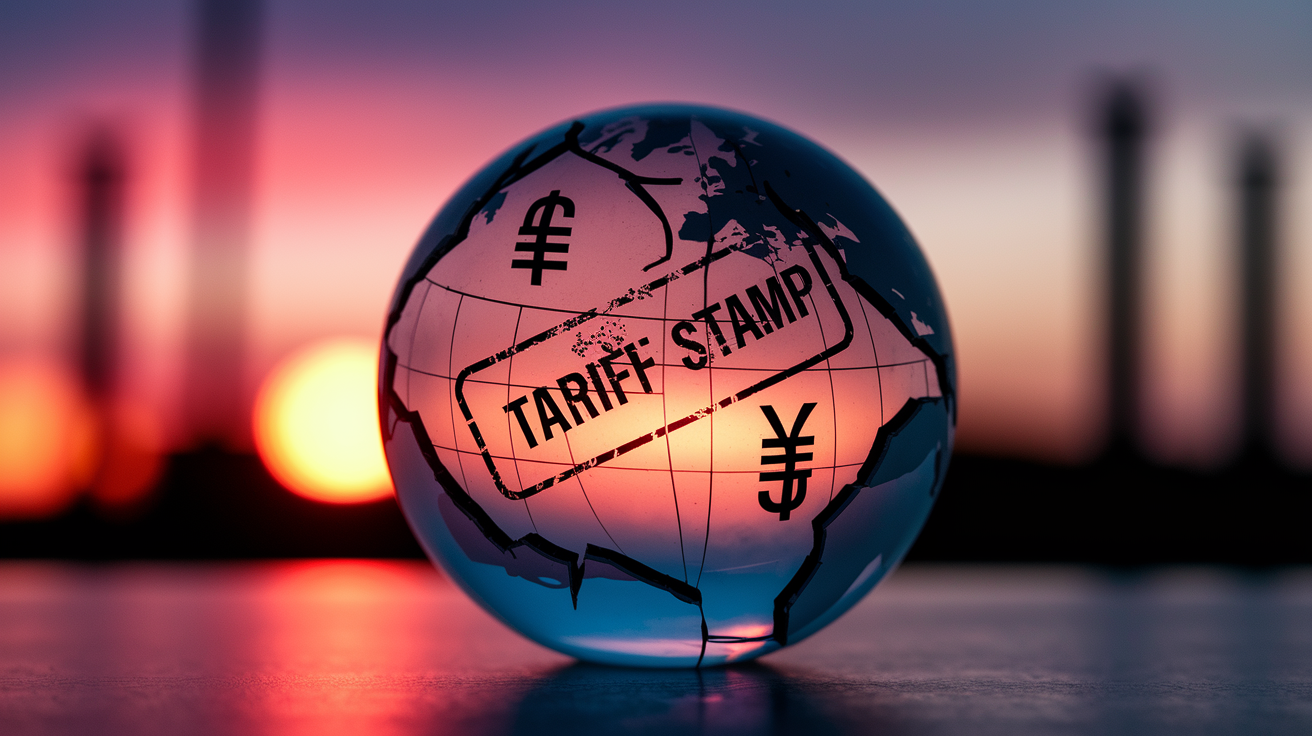
US tariff policy remains the most visible near-term risk for EM exporters. Any escalation beyond current levels would disrupt trade flows, compress profit margins for manufacturers, and force further supply-chain adjustments. The 2026 US mid-term election cycle adds uncertainty, as political positioning around trade, China policy, and industrial strategy could produce abrupt policy shifts that markets struggle to price. Asian economies with high export exposure to the US are most vulnerable, though diversification efforts provide some cushion. Safe-haven flows have shifted in response to these risks. Gold attracted strong demand as investors questioned the dollar’s and US Treasuries’ traditional safe-haven status, while short-term capital flows into emerging markets remain vulnerable to reversal if risk sentiment deteriorates sharply.
Geopolitical competition over critical minerals is intensifying, reshaping investment patterns and influence relationships. Major powers are competing for access to lithium, cobalt, rare earths, and other materials essential for AI infrastructure and the energy transition. This scramble is elevating the strategic importance of resource-rich emerging markets in Africa and Latin America, attracting capital but also raising the risk of political interference, contract disputes, and resource nationalism. Armed conflict in multiple regions (including spillover effects from wars and regional tensions) disrupts trade, raises insurance and shipping costs, and creates humanitarian pressures that divert fiscal resources and slow growth.
Short-term capital inflows, while supportive of asset prices and currency stability in the near term, carry reversal risk. These portfolio flows are sensitive to interest-rate differentials, growth surprises, and shifts in global risk appetite. A sudden repricing in developed-market bond yields, a spike in volatility, or a negative growth shock in a major emerging economy could trigger outflows and put pressure on currencies, forcing central banks to tighten policy or intervene in FX markets. Emerging economies with weaker reserve positions, higher external debt, or fragile fiscal accounts are most exposed to this dynamic.
| Risk Category | Description | Potential Impact on EM |
|---|---|---|
| Tariff escalation | Further US tariff increases or retaliatory measures from trading partners | Export volume declines, margin compression, FX pressure on manufacturing exporters |
| Capital-flow reversal | Sudden withdrawal of short-term portfolio investment due to rate or risk repricing | Currency depreciation, rising bond yields, forced monetary tightening, financial stress |
| Geopolitical shocks | Armed conflict, sanctions, competition over critical resources | Trade disruption, investment delays, elevated risk premia, humanitarian and fiscal costs |
Investment Positioning and Portfolio Strategy Within the Emerging Markets Economic Outlook

Yield-seeking strategies are well supported by the current environment. Many EM economies offer real yields that remain attractive relative to developed markets, even after adjusting for currency and credit risk. Local-currency debt drew substantial inflows as investors priced in further developed-market rate cuts and searched for income in a low-yield global environment. Equity markets in emerging economies benefited from earnings strength in technology, commodities, and financials, with sustainable investment funds notably outperforming traditional funds in early 2025. That’s a signal that environmental, social, and governance considerations are becoming material return drivers rather than just screening criteria. This outperformance reflects both the quality of cash flows in ESG-aligned companies and the structural tailwinds from energy-transition and social-infrastructure investment.
Gold exposure has become a mainstream hedge within EM portfolios. The 2025 rally was driven by tariff uncertainty, weaker confidence in US Treasuries as a safe haven, and central-bank buying from EM reserve managers. Investors are using gold to hedge currency risk, tariff-driven trade shocks, and broader geopolitical volatility. Commodity-linked equities (particularly mining companies and materials exporters) offer leveraged exposure to metals prices and benefit from improving fiscal positions in resource-rich countries. Technology and semiconductor stocks across South Korea, Taiwan, and China remain high-conviction plays, supported by robust earnings, AI-related demand, and the central role these economies play in global supply chains.
Tactical allocation requires balancing opportunity and risk. Overweighting EM equities makes sense for investors with sufficient risk tolerance and a multi-year horizon, particularly when tilted toward sectors with structural tailwinds: technology, critical minerals, energy transition, and financials in countries with improving credit profiles. Local-currency debt offers attractive carry but demands active currency management and close monitoring of capital-flow data. Hard-currency sovereign and corporate bonds provide a more conservative entry point, with lower FX risk but also lower yield. Hedging tools are essential. Currency options, gold holdings, and dynamic rebalancing can reduce downside exposure during volatility spikes without sacrificing upside participation.
- Equities: Overweight technology (semiconductors, AI-linked), commodity producers (miners, metals exporters), and financials in countries with improving credit and reserve positions.
- Local-currency debt: Attractive real yields in select markets. Requires active FX management and attention to capital-flow indicators.
- Hard-currency bonds: Lower yield but reduced currency risk. Suitable for conservative allocations seeking EM exposure.
- Commodities: Direct or equity exposure to copper, aluminum, gold, and critical minerals tied to energy-transition spending.
- Hedging strategies: Gold holdings, currency options, and sector diversification to manage tariff, FX, and geopolitical risks.
- Sector tilts: Prioritize semiconductor and technology exposure in Asia. Mining and critical-mineral plays in Africa and Latin America. Services and fintech in large domestic-demand economies.
Final Words
In the action, emerging markets show split momentum: GDP near 4 percent for 2025-26, inflation easing to about 5 percent, and stronger reserves and policy buffers.
Regional patterns matter, with Africa accelerating, Asia facing export headwinds, and large economies such as China, India and Brazil driving spillovers. Trade shifts, commodity cycles, capital flows and geopolitics will steer outcomes.
For investors, the emerging markets economic outlook favors selective exposure to local-currency debt, commodity-linked equities and tech exporters, paired with hedges and a short watchlist. Stay constructive.
FAQ
Q: What is the global emerging markets outlook for 2024–2026?
A: The global emerging markets outlook for 2024–2026 projects GDP around 4% in 2025–2026 and inflation near 5% by 2026; watch rates, commodity cycles, and capital flows for portfolio impact.
Q: How do regional growth patterns differ across emerging markets?
A: Regional growth patterns differ: Sub‑Saharan Africa is accelerating, Asia faces export slowdowns, and MENA benefits from rising oil; that means different sector tilts and regional risk concentrations to watch.
Q: Which emerging economies should investors monitor and why?
A: Investors should monitor China, India, Brazil, Mexico, South Africa, Turkey, and Nigeria for growth drivers, commodity exposure, fiscal stances, and spillovers; watch China demand and domestic policy changes as key signals.
Q: What macro drivers will most affect emerging markets through 2026?
A: The macro drivers most affecting emerging markets through 2026 are capital flows, inflation paths, interest‑rate differentials, FX volatility, reserve levels, and commodity cycles; monitor central‑bank guidance and dollar moves.
Q: How are trade dynamics and sector trends shaping EM growth?
A: Trade dynamics and sector trends shape EM growth via strong semiconductor demand, critical‑minerals demand, energy transition, services growth, and agricultural price swings; watch reshoring and AI investment for sector tilts.
Q: What are the main risks and geopolitical pressures facing emerging markets?
A: The main risks and geopolitical pressures facing emerging markets are tariff escalation, FX swings, capital‑flow reversals, supply‑chain disruptions, and resource competition; expect higher volatility and scenario‑based risk planning.
Q: How should investors position portfolios given the EM outlook?
A: Investors should position portfolios with regional diversification, EM local‑currency debt for yield, tilts to tech and commodity exporters, FX and rate hedges, and clear position sizing with drawdown plans.
Q: What short‑term indicators should investors watch next?
A: Short‑term indicators to watch next are central‑bank guidance, developed‑market rate moves, commodity prices, export volumes, FX reserves, and short‑term capital flows to confirm the base case.
Q: What tactical strategies can investors use in EM over 2024–2026?
A: Tactical strategies include equity tilts to exporters and tech, allocations to EM local‑currency bonds, selective commodity exposure, targeted FX hedging, and using gold as a hedge against policy or tariff shocks.