

What if sticking to your target allocation mattered more than chasing the next hot stock?
Small drift can turn a planned 60/40 into 75/25, changing your risk and how much you might lose on the next downleg.
This post cuts through the noise with rebalancing strategies that actually work: calendar, threshold, hybrid, plus the tradeoffs, tax effects, and simple rules that keep your plan intact.
You’ll learn when to act, when to let drift run, and how to rebalance without blowing up returns or taxes.
Restoring Your Target Allocation

Rebalancing means deliberately buying and selling assets to bring your portfolio back to the percentages you originally chose. You start with a 60% stock, 40% bond split. Six months later, the market’s pushed that to 68% stocks and 32% bonds. Rebalancing means selling enough stocks or buying enough bonds to get back to 60/40. Markets move. Winners outpace losers. Drift happens.
Let allocation drift too far and you’ve changed your risk profile in ways you probably didn’t intend. Equities climb, your stock position swells from 60% to 75%, and now you’re carrying way more market risk than your plan called for. When the next downdraft arrives, that unintended concentration can deliver losses bigger than you were ready to accept. Rebalancing keeps your risk exposure lined up with your original objectives and time horizon instead of letting market momentum call the shots.
The mechanical steps are pretty straightforward. Most investors follow this sequence:
-
Calculate current allocation. Add up your holdings and figure out each asset class as a percentage of total portfolio value. Example: $100,000 total with $65,000 in stocks and $35,000 in bonds gives you 65% equities and 35% fixed income.
-
Compare to your target. If your target is 60% stocks and 40% bonds, you’re currently 5 percentage points overweight stocks and 5 points underweight bonds.
-
Determine trade sizes. To restore the 60/40 mix, you need to move 5% of total portfolio value, $5,000 in this example, from equities into bonds.
-
Execute the trades. Sell $5,000 of stock positions and buy $5,000 of bond positions, or redirect available cash flows if you’ve got contributions or dividends arriving.
-
Document the rebalance. Write down the date, amounts, and reasoning so you can track frequency and look back at results over time.
New contributions, dividends, and withdrawals all give you chances to nudge allocation back toward target without forcing taxable sales. Lots of investors start by steering fresh cash into underweighted asset classes before they resort to selling winners.
Calendar-Based Rebalancing

Time based rebalancing sets a fixed interval, monthly, quarterly, semi-annually, or annually, and you review and adjust your portfolio on that schedule no matter how much drift has happened. Annual rebalancing is the most common rhythm among individual investors. You pick a date each year, measure your allocation, and trade if you’re off target. Quarterly reviews appeal to investors who want tighter control or expect higher volatility. Semi-annual splits the difference.
The main upside is simplicity. You don’t monitor prices or percentages constantly. You mark the calendar, do the math on the chosen date, and act. That predictability keeps the process systematic and cuts down on decision fatigue. Calendar rebalancing also tends to produce fewer taxable events than very active threshold approaches because you’re not reacting to every market swing.
The drawback? Calendar intervals ignore interim drift. Your equity allocation rockets from 60% to 80% two months after your annual rebalance, and you’re carrying that elevated risk for ten more months. A severe correction during that window can deliver a much larger loss than your target risk called for. Calendar methods work best when you pair them with reasonable tolerance bands or when your portfolio’s volatility is moderate enough that drift stays within acceptable bounds between reviews.
Threshold-Based Rebalancing
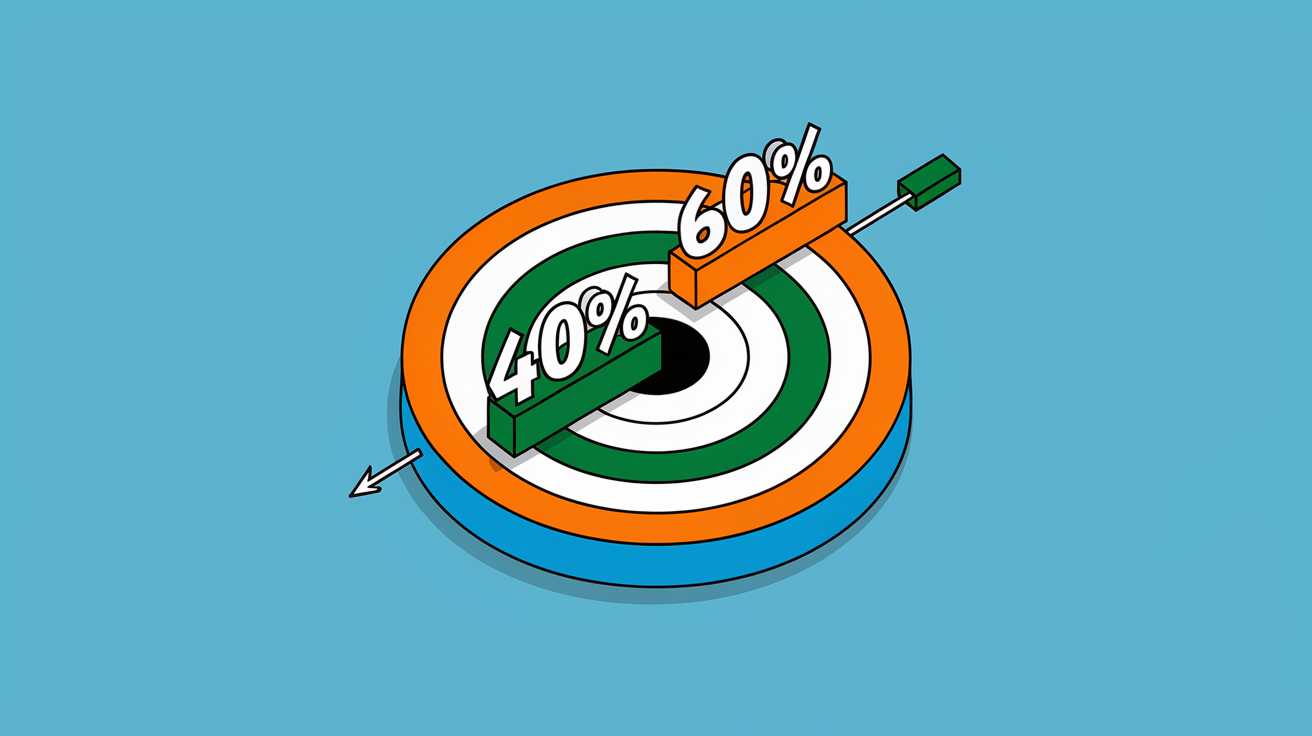
Threshold rebalancing triggers action whenever an asset class moves beyond a pre-set percentage range. You define tolerance bands around your target allocation, commonly 5 or 10 percentage points, and rebalance as soon as actual weights breach those limits. For example, a 60% equity target with a 5 point band means you rebalance when stocks exceed 65% or drop below 55%. Until drift crosses that line, you leave the portfolio alone.
This approach responds directly to market volatility. In calm markets your allocation may stay inside the band for months, so you trade infrequently and save on costs. In turbulent periods large moves trigger rebalances sooner, pulling risk back in line before it compounds. Threshold methods naturally put a “buy low, sell high” discipline into practice because you’re adding to positions that have underperformed and trimming those that have run ahead.
The tradeoff is monitoring. You need to track allocations regularly, weekly or daily if markets are swinging, so you catch breaches quickly. Narrow bands increase responsiveness but also raise trade frequency and costs. Wider bands reduce trading but allow more temporary risk drift. Many advisors use bands between 3 and 5 percentage points for core equity allocations in taxable accounts, balancing control with tax efficiency.
Common threshold rules include:
- Absolute percentage band: Rebalance when any asset class deviates ±5 percentage points from target (60% equity target, rebalance at 65% or 55%).
- Relative percentage band: Rebalance when drift exceeds a proportion of the target weight (example: 10% of the 60% equity target equals ±6 percentage points, so rebalance at 66% or 54%).
- Multi-tier bands: Small drift triggers a partial rebalance. Larger drift triggers a full reset. Example: at ±3 points rebalance halfway back to target, at ±5 points rebalance fully.
- Asset-specific bands: Apply tighter bands to volatile positions (±3% for small cap equities) and wider bands to stable allocations (±7% for investment grade bonds).
Hybrid Rebalancing Approaches

Hybrid methods combine scheduled check-ins with drift triggers. A typical hybrid rule says review your portfolio quarterly, but only rebalance if any asset class has moved outside its tolerance band at that review date. If all allocations sit within tolerance, you record the current weights and wait until the next scheduled review. This structure gives you the discipline of a calendar without forcing unnecessary trades during stable periods.
Another hybrid variant layers an immediate threshold on top of a calendar schedule. You rebalance automatically anytime drift exceeds a high threshold, say 8 percentage points, regardless of calendar, but you also perform a routine review annually or semi-annually even if no threshold has been breached. That catches both large dislocations and slow creep. The approach reduces whipsaw trades compared to pure threshold strategies while staying more responsive than pure calendar methods. Many robo-advisors and custodial platforms use hybrid logic because it balances operational efficiency with risk control for clients across different account sizes and volatilities.
Tax Implications of Rebalancing
Selling appreciated positions in a taxable brokerage account triggers capital gains taxes, and those taxes cut into your effective return. You bought a stock fund at $50,000 and it’s now worth $70,000. Selling $10,000 of it realizes a proportional gain. Gains held longer than one year get taxed at long term capital gains rates, which for most investors range from 0% to 20% federally. Gains on assets held one year or less face short term rates, which match ordinary income brackets and can exceed 35%. Frequent rebalancing in taxable accounts can pile up short term gains and eat away at compounding.
Tax loss harvesting offers a counterbalance. When you sell a losing position to rebalance, that realized loss offsets other capital gains in the same tax year. If your equity allocation has drifted high because international stocks surged but your domestic small caps are down, you can sell the small caps at a loss and use the proceeds to buy an equivalent but not substantially identical fund, harvesting the loss while staying invested. Losses beyond your gains can offset up to $3,000 of ordinary income per year, with unused losses carrying forward indefinitely.
The most tax efficient rebalancing happens inside retirement accounts. Traditional IRAs, Roth IRAs, and 401(k) plans. Trades within those accounts don’t trigger current capital gains taxes. You can buy and sell as often as necessary to maintain your target allocation without worrying about a tax bill. For that reason, many investors concentrate their rebalancing activity in tax-advantaged accounts and use taxable accounts primarily for contributions or withdrawals that naturally shift allocation.
Practical ways to minimize rebalancing taxes:
- Direct new contributions to underweighted assets instead of selling overweighted ones. If bonds are light, invest your next paycheck contribution entirely in bonds until the allocation normalizes.
- Use dividends and interest to buy underweights rather than reinvesting them proportionally.
- Rebalance through withdrawals if you’re taking distributions. Sell overweighted positions to fund spending, moving allocation back toward target without creating net taxable events beyond what the withdrawal itself requires.
- Harvest losses opportunistically during rebalances. Pair loss realization with gain realization in the same year to keep your net taxable gain low.
- Prioritize tax-sheltered accounts for all trades that aren’t necessary for cash flow. Execute most rebalancing inside IRAs and 401(k)s, leaving taxable accounts to drift within wider bands.
Costs and Practical Constraints

Every trade carries costs, and those costs subtract directly from returns. Even commission free stock trades involve bid ask spreads, the difference between the price at which you can buy and the price at which you can sell. On a $10,000 equity trade, a 0.05% spread costs you $5. Mutual fund trades may trigger short term redemption fees if you haven’t held the fund long enough. Index funds and ETFs generally have tighter spreads than actively managed funds, but high frequency rebalancing still racks up frictional costs that compound over decades.
Advisory fees and platform costs matter too. If you pay an advisor 0.50% annually on assets under management, frequent rebalancing adds operational time that indirectly raises the cost of service unless the advisor uses automated tools. Some custodians charge per trade fees on certain asset classes or apply balance based fees that make small frequent adjustments expensive. Investors using low cost brokers with true zero commission trades and access to commission free ETFs face the lowest rebalancing costs, which makes more frequent threshold based strategies viable.
The key is balancing tightness of risk control against the drag of execution costs. A study comparing annual rebalancing to monthly rebalancing in a diversified portfolio often shows minimal performance difference after costs, because the benefit of tighter tracking gets offset by the expense of extra trades. Practical cost categories to evaluate:
- Trading commissions and fees: per trade charges, mutual fund transaction fees, platform custody fees.
- Bid ask spreads and market impact: the implicit cost of buying at the offer and selling at the bid. Larger in less liquid securities.
- Tax costs: realized capital gains generate tax liabilities that reduce after tax compounding. Short term gains are especially expensive.
Practical Examples of Rebalancing

A portfolio starts the year at $100,000 with a 60% stock, 40% bond target: $60,000 in equities and $40,000 in bonds. After six months, equities rally and the stock position grows to $72,000 while bonds drift to $38,000. Total portfolio value is now $110,000. Current allocation is 65.5% stocks ($72,000 ÷ $110,000) and 34.5% bonds. The drift is 5.5 percentage points above target for equities.
To restore the 60/40 mix, you calculate the target dollar amounts. 60% of $110,000 is $66,000 in stocks, and 40% is $44,000 in bonds. You currently hold $72,000 in stocks, so you need to sell $6,000 of equities. You hold $38,000 in bonds, so you need to buy $6,000 of bonds. After executing those trades, your allocation returns to 60% equities and 40% bonds, and your risk profile matches your plan.
Another scenario: a 70% stock, 30% bond portfolio with a 5 percentage point tolerance band. If equities fall and the allocation shifts to 64% stocks and 36% bonds, the equity position has drifted 6 points below target, breaching the lower band. A threshold rebalance would sell bonds and buy equities to bring stocks back to 70%, effectively buying equities at lower prices and locking in the discipline of adding to positions during weakness.
| Scenario | Drift Amount | Required Action |
|---|---|---|
| Equity rally pushes 60/40 to 68/32 | +8 percentage points equities | Sell equities, buy bonds to restore 60/40 |
| Bond decline shifts 50/50 to 55/45 | +5 percentage points equities | Sell equities, buy bonds to restore 50/50 |
| Market correction drops 70/30 to 64/36 | −6 percentage points equities | Sell bonds, buy equities to restore 70/30 |
Decision Criteria for Choosing a Strategy
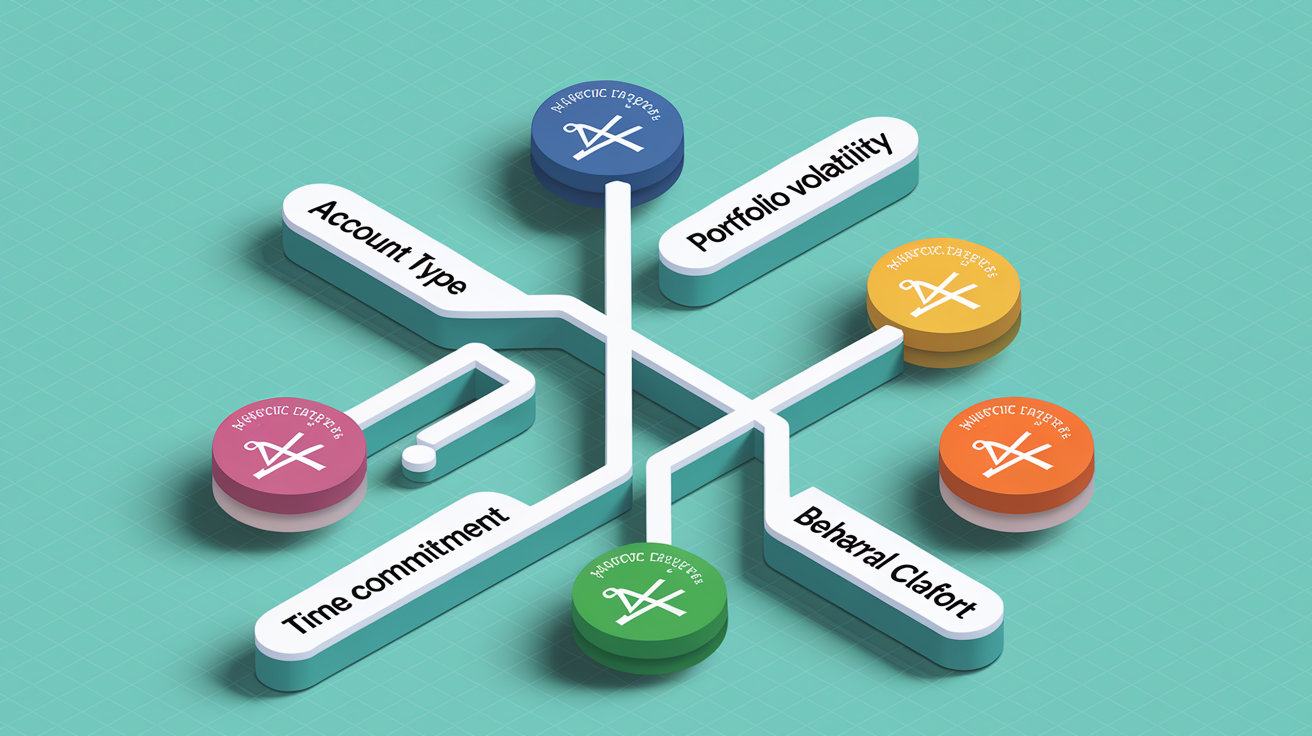
No single rebalancing strategy fits every investor. The right approach depends on your account structure, tax situation, time you can dedicate to monitoring, the volatility of your holdings, and how sensitive you are to trading costs. An investor with a large 401(k) and minimal taxable holdings can rebalance more frequently without tax consequences. Someone managing a taxable portfolio with embedded gains may prefer annual or threshold based rebalancing to limit capital gains realization.
Cost tolerance matters. If your broker charges per trade fees or your portfolio includes mutual funds with redemption penalties, frequent rebalancing becomes expensive. In that environment, an annual calendar rebalance or a wide threshold band, say 7 to 10 percentage points, makes more sense than quarterly or narrow band methods. On the other hand, commission free ETF platforms and tax sheltered accounts lower the friction enough that quarterly or 3 point threshold strategies become practical.
Key decision factors include:
- Account type: Tax-advantaged accounts favor more frequent rebalancing. Taxable accounts favor fewer trades and wider bands.
- Portfolio volatility: High volatility allocations (heavy in small cap, emerging markets, sector funds) benefit from tighter monitoring and smaller tolerance bands.
- Time commitment: Calendar methods require less ongoing attention. Threshold methods demand regular monitoring.
- Tax efficiency: Investors in high tax brackets should minimize turnover in taxable accounts and use contributions or tax loss harvesting to rebalance.
- Behavioral comfort: Some investors find calendar discipline easier to follow. Others prefer the responsiveness of threshold triggers and feel more in control checking allocations frequently.
Final Words
In the action, you learned how to restore your target allocation: what rebalancing is, the five-step process to assess and trade, and examples that show how drift raises risk.
We compared calendar, threshold, and hybrid methods and covered tax and cost trade-offs so you can balance simplicity, responsiveness, and tax efficiency. Watch allocation drift, tax impact, and transaction costs.
Use the decision criteria to pick the right plan. With thoughtful portfolio rebalancing strategies, you’ll keep risk aligned with goals and make steady progress.
FAQ
Q: What is the 5 25 rule for rebalancing?
A: The 5/25 rule for rebalancing is a heuristic: keep tolerance bands of about 5 percentage points for asset drift and avoid any single holding exceeding roughly 25 percent, rebalancing when either limit is breached.
Q: What is Warren Buffett’s 90/10 rule?
A: Warren Buffett’s 90/10 rule is an allocation tip: put about 90 percent in a low-cost S&P 500 index fund and 10 percent in short-term government bonds to preserve capital and simplify investing.
Q: What is the 10/5/3 rule of investment?
A: The 10/5/3 rule of investment is a rough sizing guideline: use ~10% tolerance for major allocations, ~5% for sub-asset moves, and ~3% position limits for individual high-risk holdings to control concentration.
Q: What is the 70/30 portfolio strategy?
A: The 70/30 portfolio strategy allocates 70 percent to stocks and 30 percent to bonds, aiming for growth with some downside cushion—suitable for moderate-risk investors with a medium-to-long time horizon.