

What if a single announcement can double a stock or erase half its value in a day?
Catalyst stocks are equities that jump or sink when a clear trigger, like an earnings beat, FDA decision, merger bid, or surprise data drop, reshapes what investors expect about future revenue, profit, or risk.
This post explains what catalysts mean, why they matter for portfolios, and how to spot scheduled and surprise events so you can size positions, hedge, or avoid nasty surprises.
Defining Catalyst Stocks and What a Catalyst Means in the Market

A catalyst stock is any equity that can move hard and fast when something specific happens. The catalyst is the trigger—an announcement, data drop, regulatory call, or corporate move that changes what investors think the company’s future revenue, profit, risk, or capital structure will look like. When those expectations shift, buyers and sellers react, often creating serious volume and volatility within hours. Catalyst stocks meaning describes where news becomes immediate price action.
Catalysts split into two groups: scheduled and unscheduled. Scheduled ones include earnings reports, product launches, FDA deadlines, shareholder votes, and economic prints the market already knows about. Unscheduled catalysts show up without warning—surprise merger bids, sudden trial results, activist letters, or regulatory probes. Both shift what people expect, but unscheduled events usually produce bigger initial moves because there’s less time to price things in. What are catalyst stocks? They’re stocks where known events can push prices fast enough to create real trading setups or portfolio risks you can’t ignore.
How much the stock moves depends on how big the surprise is versus what was already baked in. A biotech waiting on FDA news might already reflect a 70 percent approval chance. If approved, maybe it rises 10 or 15 percent. If rejected, it could drop 40 percent or worse. Small caps and biotech names can swing 10 to 100 percent intraday on yes-or-no outcomes, while large caps typically move 1 to 10 percent even on major news.
The most common catalyst examples:
- Earnings reports and guidance updates
- FDA approvals, rejections, or trial data
- Merger bids, acquisitions, or asset sales
- Product launches, commercial wins, and patent grants
Key Types of Stock Catalysts and How They Impact Prices
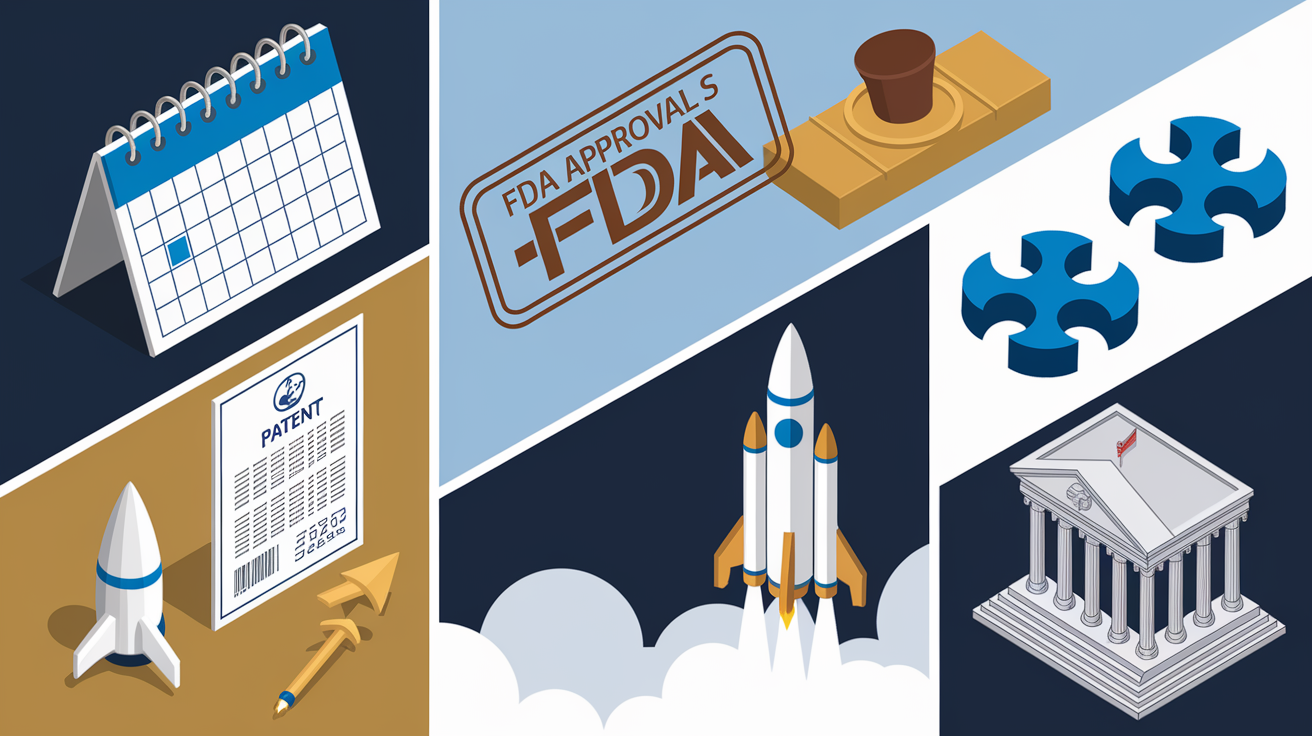
Types of stock catalysts range from quarterly rituals to one-time shocks, and each produces its own market behavior. Earnings catalysts hit four times a year for every public company, creating roughly 24 weeks annually when big chunks of the market reprice based on results and what management says next. A beat or miss changes future cash flow expectations, which investors discount into today’s price immediately. Revenue surprises, margin beats, and guidance shifts all act as sub-catalysts within the broader earnings event, each capable of moving the stock several percentage points.
Regulatory decisions are high-stakes binary events, especially in biotech, pharma, and industries needing government approval or legal clearance. FDA approval catalyst biotech setups often move 30 to 100 percent intraday because the outcome determines whether years of R&D spending will pay off or get written off. A yes validates the pipeline and can lift peer stocks too. A no can wipe out hundreds of millions in market cap in minutes. Environmental permits, patent rulings, and antitrust decisions work the same way—each outcome reshapes the company’s ability to generate cash.
Merger acquisition catalyst events reprice both companies. When a $26.2 billion deal gets announced, the target’s shares jump near the offer price, and the buyer’s shares move based on whether investors see the deal as smart or dilutive. Arb spreads open right away as traders weigh deal risk—regulatory odds, vote timing, financing contingencies. Product launch catalyst effect unfolds over weeks or months as early sales data, uptake, and competitive response become clear. A major launch shifts revenue forecasts, especially if it addresses a big market or replaces declining revenue.
Six catalyst categories that matter most:
-
Earnings and guidance — quarterly events that reset revenue, profit, and outlook expectations. Typical moves 3 to 15 percent for large caps, more for small caps or sharp surprises.
-
Regulatory approvals and denials — FDA, EPA, or court calls that decide if a product can be sold. Binary outcomes often move biotech and small caps 20 to 100 percent same day.
-
Mergers, acquisitions, divestitures — structure changes that reprice equity based on deal terms, synergy guesses, and completion odds. Targets gap to offer price, buyers move on accretion and strategy.
-
Product launches and milestones — first sales, rollouts, adoption numbers that prove or challenge revenue projections. Impact depends on the product’s share of total revenue and competitive spot.
-
Patent grants, litigation, IP news — events that protect or threaten pricing power and exclusivity. Can add or subtract years of high-margin revenue from the model.
-
Macro and policy events — rate decisions, stimulus news, tariff changes, or geopolitical shocks that reset discount rates, demand forecasts, or cost structures across whole sectors.
Different catalysts produce different magnitude moves because of probability, time horizon, and financial impact. A 5 percent guidance raise might lift a stock 2 or 3 percent if strong results were already expected. An unexpected FDA approval can double a biotech if the base case was rejection. Liquidity and volatility respond instantly—volume surges as people rush to adjust, bid-ask spreads widen as makers reprice risk, and options IV spikes as traders hedge or bet on the next leg.
Real-World Examples That Illustrate Catalyst Stocks in Action

On June 7, 2021, the FDA granted accelerated approval for an Alzheimer’s drug under development by a major biopharma. The regulatory decision was a binary catalyst—yes or no—and the positive outcome triggered a 38 percent intraday jump. The move reflected years of uncertainty suddenly resolved in favor of commercialization. Volume spiked to multiples of normal, and options IV collapsed after the announcement as event risk disappeared. This shows how regulatory catalysts can produce large, fast moves when the outcome determines whether a multi-billion revenue stream will happen.
On November 9, 2020, a vaccine developer announced interim trial results showing efficacy above 90 percent. The efficacy number exceeded market expectations and shifted probability-weighted revenue forecasts sharply higher. The stock and several sector peers rose by single digits intraday, while broader indexes rallied on implications for economic reopening. This illustrates how clinical trial catalyst phases, especially late-stage readouts, can move not only the company but related equities through sector sympathy and changed macro assumptions.
On June 13, 2016, a tech company announced a $26.2 billion acquisition. The deal price and structure repriced both companies immediately. The target’s shares gapped toward the offer, and the buyer’s stock moved based on investor views of strategic fit and financing impact. Arb traders entered to capture the spread between current price and deal value, while event funds assessed regulatory and vote risk. This merger acquisition catalyst example shows how corporate actions create defined price targets and trading strategies around deal completion odds.
| Catalyst Type | Event | Result |
|---|---|---|
| Regulatory Approval | FDA accelerated approval for Alzheimer’s drug, June 7, 2021 | Stock rose approximately 38% intraday |
| Clinical Trial Readout | Vaccine efficacy >90% announced, November 9, 2020 | Single-digit percentage gains; sector-wide sentiment shift |
| Merger & Acquisition | $26.2 billion acquisition announced, June 13, 2016 | Target shares gapped to near offer price; arbitrage spreads opened |
How Investors Identify Catalyst Stocks Before the Move Happens

Screening tools for catalyst stocks start with calendars that publish scheduled events. Earnings calendars list release dates, expected EPS, and consensus revenue, letting you plan positions and hedges around quarterly reports. Regulatory calendars track FDA PDUFA dates, trial data releases, and shareholder votes. These known dates let you size positions right, reduce exposure if the risk-reward doesn’t work, or add if the setup looks good. Catalyst stock watchlist creation begins with finding companies facing near-term scheduled catalysts, then filtering by liquidity, volatility history, and whether the market already priced in the expected outcome.
News flow serves as a real-time signal. Breaking announcements—unscheduled M&A bids, surprise trial data, activist campaigns, regulatory actions—show up first on wires, social media, and press releases. Traders watch Twitter feeds from execs, regulators, and financial journalists to catch information seconds before it hits broader distribution. Volume spikes and odd price action often come before official news, as insiders or algos react to early signals. Watching for sudden volume increases, especially outside normal hours, can flag that something’s happening even before the headline is clear.
Implied volatility in options markets works as a forward indicator. When a known event approaches—earnings, FDA decision, product launch—option prices rise as traders pay more for the right to participate or hedge the expected move. A sharp IV increase two weeks before an FDA deadline signals the market expects a significant move, even if direction is uncertain. You can use volatility charts to see how much movement is priced in and whether current premiums are expensive or cheap relative to the stock’s historical behavior around similar events.
Five tools to identify catalysts:
- Earnings and economic calendars listing quarterly reports, FOMC meetings, jobs data, inflation prints
- Regulatory calendars tracking FDA PDUFA dates, patent decisions, court schedules
- Real-time news feeds and SEC alerts monitoring 8-K filings, merger agreements, material disclosures
- Implied volatility charts and options flow showing rising hedging activity and expected move size
- Social media monitoring and curated watchlists from trading communities sharing catalyst ideas and breaking news
Risks, Volatility, and Managing Positions Around Catalyst Events

Volatility around catalysts surges because binary outcomes compress months or years of uncertainty into one moment. FDA approvals, trial readouts, merger votes can move stocks 20 to 100 percent same day, and direction is often impossible to predict with confidence. Even when probability seems skewed—say, 70 percent approval chance—the 30 percent downside can produce a larger absolute loss than the 70 percent upside produces in gain. This asymmetry makes position sizing critical. You reduce exposure to levels where worst case doesn’t materially damage the portfolio, often limiting catalyst trades to 2 to 5 percent of total capital per position.
Liquidity concerns intensify around the event. Bid-ask spreads widen as market makers pull back, unwilling to take the other side when information’s about to drop. If the outcome surprises, the first minutes can see gaps of 10, 20, or 50 percent with minimal shares at intermediate prices. Stop orders may execute far below intended levels, and market orders can fill at prices way worse than the last quoted bid or ask. If you trade catalysts, plan entry and exit prices ahead of time, use limit orders to control execution, and don’t over-leverage positions that normal pre-announcement volatility could stop out.
Hedging through options spreads or trimming size before the event are common strategies. A long stock position ahead of earnings might pair with a protective put or collar to cap downside, though option costs rise as IV increases. Some exit half before the catalyst, locking partial gains or limiting losses while keeping exposure to the potential move. Others skip catalyst trades entirely, preferring to wait for things to settle and then evaluate whether the new price offers better risk-reward.
Four position management rules for catalyst events:
-
Size to survive worst case — limit exposure so a 30 to 50 percent adverse move doesn’t exceed your risk tolerance or force emotional calls.
-
Set predefined exits and use limit orders — decide ahead what price you’ll take profit or cut losses, and use limits to avoid poor fills during volatile gaps.
-
Monitor liquidity and avoid illiquid names around catalysts — if average daily volume is low or bid-ask spread is wide, the cost of getting in or out can eat your edge.
-
Consider hedging or trimming before high uncertainty events — IV and option premiums rise before catalysts. If hedging cost is reasonable relative to risk, a protective put or collar can provide peace of mind.
Earnings as One of the Most Important Recurring Stock Catalysts

Earnings seasons create roughly 24 weeks per year of concentrated catalyst activity. Each company reports quarterly results, and those reports reset expectations for revenue growth, margins, cash generation, and forward guidance. An earnings beat catalyst happens when reported EPS or revenue exceed consensus, signaling stronger business performance. The stock often gaps higher at the open, and the move can extend for days if guidance is also raised or if the beat suggests positive trends for peers. An earnings miss catalyst triggers selling as investors revise models down and reduce positions.
The headline numbers matter, but the real driver is often the surprise relative to what was already priced in. A company can report record profit and still fall if the market expected more, or if next quarter’s guidance disappoints. Guidance raise catalyst and guidance cut catalyst scenarios can produce larger moves than the backward results themselves. Forward guidance tells investors what management sees coming, and any change to that outlook forces a re-rating of fair value. Revenue surprise as catalyst is equally important, especially for growth companies where top-line expansion matters more than near-term profitability.
Earnings also generate sector sympathy moves. When a bellwether beats and raises guidance, smaller peers often rise on the assumption industry conditions are strong. When a major player misses and cites macro headwinds, related stocks may sell off before they even report. This makes earnings catalysts important beyond individual positions. You watch early reporters in each sector to gauge what might happen to later ones and adjust portfolio weights accordingly.
Biotech and Pharmaceutical Catalyst Stocks: High-Risk, High-Reward

Biotech catalyst calendar events are among the most volatile because outcomes are often binary and financial stakes are enormous. A drug approval can validate years of research and open a multi-billion revenue opportunity. A trial failure or rejection can make that spending worthless overnight. Clinical trial phases—Phase I safety, Phase II efficacy signals, Phase III pivotal data—each serve as catalysts, with later stages carrying more weight because they determine market access. Pharmaceutical trial readout catalyst announcements often include efficacy percentages, safety data, and statistical significance, and the market reprices immediately based on whether those numbers meet, beat, or miss.
FDA approval catalyst biotech scenarios generate especially sharp moves around PDUFA dates, the FDA’s target decision deadline. If approved, the stock can double or more. If the FDA issues a Complete Response Letter citing deficiencies, the stock can fall 40 to 70 percent same day. Even before PDUFA, advisory committee votes provide early signals—an overwhelmingly positive vote increases approval odds and lifts the stock, while a split or negative vote pressures shares. Medical device approval catalyst events follow a similar pattern, with FDA 510(k) clearances or PMA approvals unlocking commercial timelines.
Pipeline milestone catalysts biotech companies hit include enrollment completion, interim analyses, data readouts at medical conferences, and partnership deals with larger pharma. Each milestone reduces uncertainty about commercial potential and can trigger re-rating. Licensing deals or milestone payments from partners serve as validation—if a major pharma commits hundreds of millions to a pipeline asset, the market views that as credible endorsement of the science and commercial opportunity.
Four common biotech catalysts:
- Clinical trial data readouts at major medical conferences or via press release
- FDA decision dates (PDUFA deadlines) and advisory committee meetings
- Partnership announcements, licensing deals, or milestone payments from big pharma
- Patent grants, patent litigation outcomes, and regulatory exclusivity extensions
How Catalysts Drive Volume, Volatility, and Technical Breakouts

Volume spike catalyst dynamics begin hours or days before the event as participants build or hedge positions. Traders expecting a positive catalyst buy shares or calls, while those expecting bad news short or buy protective puts. Average daily volume can double or triple in sessions leading up to a major announcement, and when news hits, volume often surges to five or ten times normal as algos, market makers, and retail all react at once. High volume confirms the catalyst is driving genuine price discovery, not just noise. Low volume moves after a catalyst suggest limited conviction and increase reversal risk.
Implied volatility and catalysts are tightly linked. As a known event approaches, options traders bid up near-term contracts, pushing IV higher. This reflects uncertainty about the size and direction of the coming move. After the catalyst is announced and immediate reaction plays out, IV collapses—a volatility crush. Traders who bought options hoping to profit may find that even if the stock moved their way, the drop in option value from falling IV offsets the gain from the stock’s movement. Understanding this helps you decide whether to use options or trade the stock directly around catalysts.
Short interest catalyst and short squeeze catalyst dynamics add another layer. If a heavily shorted stock gets unexpectedly positive news, shorts scramble to cover, creating a wave of buy orders that amplifies the upward move. The result is a short squeeze—a rapid, self-reinforcing rally as each round of covering lifts the stock and forces more shorts to exit. Catalysts combined with high short interest can produce moves far larger than fundamental news alone would justify. Monitoring short interest as percent of float helps identify stocks where a positive catalyst could trigger outsized price action.
| Indicator | What It Shows | Why It Matters |
|---|---|---|
| Volume | Number of shares traded in a period; spikes before and during catalyst events | Confirms genuine price discovery and reduces risk of low-liquidity traps; high volume supports sustained moves |
| Implied Volatility | Market’s expectation of near-term price movement, derived from option prices | Rising IV signals upcoming catalyst risk; post-event IV crush can erode option profits even if direction is correct |
| Short Interest | Percentage of float sold short; measures bearish positioning | High short interest amplifies upward moves when positive catalysts trigger short covering, creating squeeze potential |
Technical breakouts often align with catalysts. A stock in a narrow range for weeks may break out to a 52-week high the morning after an earnings beat or FDA approval. The catalyst provides the fundamental reason, while the technical pattern—resistance levels, volume confirmation, momentum indicators—signals whether the move has legs. Catalysts and technical analysis work best together: the catalyst identifies the trigger, the chart shows whether market structure supports a sustained trend or whether the move will fade.
Event‑Driven Investing and Building a Catalyst‑Focused Portfolio

Event-driven investing basics center on positioning around specific corporate or macro events that have defined timelines and measurable outcomes. Unlike buy and hold that relies on long-term business quality, event-driven approaches seek to profit from mispricings that resolve when a catalyst occurs. A catalyst-focused portfolio might hold a mix of pre-earnings positions, merger arb spreads, biotech names ahead of trial readouts, and special situations like spin-offs or activist campaigns. The common thread is each position has a near-term catalyst and a thesis for how the market will reprice when that catalyst materializes.
Diversification around catalyst events is essential because individual catalysts are uncertain. A portfolio built on five FDA decisions, three earnings reports, and two merger closings spreads risk so one adverse outcome doesn’t destroy returns. Position sizing reflects each catalyst’s probability and potential move. Higher confidence, lower volatility events can take larger weight, while binary long shots remain small. Sector and theme diversification also matters. A portfolio concentrated in biotech catalysts faces correlated risk if the FDA tightens approval standards or trial failures cluster.
Avoiding false positives requires careful evaluation. Not every press release or headline qualifies as a meaningful driver. A “strategic review” announcement may generate buzz but produce no near-term action. An analyst upgrade from a small firm may move the stock intraday but lack credibility to sustain a trend. Key metrics to evaluate catalyst credibility include the source’s track record, the financial magnitude of the event, management’s history of delivering, and whether the catalyst aligns with broader market or sector trends.
Five evaluation metrics for catalyst credibility and portfolio fit:
-
Probability assessment — estimate likelihood of each outcome (approval, beat, deal close) using historical base rates, analyst consensus, and company factors. Avoid overconfidence in any single scenario.
-
Expected move size — use historical volatility, options-implied moves, and comparable events to gauge how far the stock could move. Ensure reward justifies risk and position size.
-
Company fundamentals and balance sheet strength — a catalyst that succeeds but hits a company with weak cash flow or high debt may not produce the expected rally. Fundamental quality supports sustained re-rating.
-
Market context and sector sentiment — catalysts work best when the broader market or sector is receptive. A strong earnings beat during sector rotation away from that industry may underperform expectations.
-
Liquidity and trading structure — ensure the stock has sufficient volume and narrow spreads so you can enter and exit at reasonable prices. Illiquid catalyst trades risk getting trapped if outcome disappoints.
Final Words
In the action, catalysts are events that quickly reprice stocks — scheduled (earnings, FDA dates, product launches) or unexpected (merger offers, surprise reads).
This post defined catalyst stocks, walked through key types and real examples, showed how to spot them with calendars, IV and filings, and gave risk-management rules for position size, stops and hedges.
Knowing the catalyst stocks meaning helps you translate news into portfolio moves and decide size, timing, and hedges. Watch calendars, volatility, and liquidity as next steps. With a steady process, catalysts can be managed and even harnessed — a practical edge for patient investors.
FAQ
Q: What are catalyst stocks, what is a catalyst in investing, and what is an example of a catalyst?
A: Catalyst stocks are shares that move sharply when a specific event—called a catalyst—changes expectations. Examples include earnings reports, FDA decisions, M&A announcements, and product launches.
Q: What are the top 3 AI stocks to buy now?
A: The top 3 AI stocks often cited are Nvidia, Microsoft, and Alphabet, with Nvidia leading chips, Microsoft delivering cloud and integration, and Alphabet building large models and data infrastructure.