

Are headlines the reason stocks swing, or are there clearer sparks behind the moves?
Most of the time it’s catalysts—events, announcements, or data that change how investors value a company or the market.
This piece breaks down the main types—company-specific (earnings, buybacks, product news), regulatory and legal events, macro shocks (rates, inflation), geopolitical shocks, and sector trends—and shows why each moves prices differently.
You’ll get a simple portfolio map: who benefits, who gets pressured, and three concrete items to watch next.
Core Categories of Stock Market Catalysts and How They Move Prices

A catalyst is any event, announcement, or piece of information that triggers a measurable change in a stock’s price or trading volume. Think of it as the spark that shifts how investors see a company and makes capital flow in or out. You’ve got two main types: company-specific catalysts tied directly to one stock (earnings, product launches, FDA decisions) and broader macro catalysts that operate at the sector or market level (rate changes, regulatory shifts, geopolitical shocks). Both can generate breakouts. But the timing, size, and staying power of the move depend heavily on which type you’re dealing with.
Volume surges often show up alongside catalysts. Those surges tell you whether the catalyst has real follow-through or if it’s just noise. A catalyst that arrives without volume rarely produces sustained price action. But when you get a well-timed catalyst paired with heavy institutional participation, you can see a stock lift 50 percent, 100 percent, or more within a single session or across a few days. Understanding where the catalyst comes from and how wide its reach is helps you set realistic expectations for how big and how long the move will last.
Six major groups form the foundation of most price-changing events:
- Earnings updates and guidance revisions. Quarterly reports that beat, meet, or miss analyst expectations, plus forward-looking commentary that resets revenue or profit forecasts.
- Corporate actions. Stock buybacks, dividend changes, mergers, acquisitions, licensing deals, and rights issues that alter capital structure or ownership.
- Regulatory and legal events. FDA approvals, breakthrough therapy designations, patent litigation outcomes, antitrust reviews, and class-action lawsuit filings.
- Macroeconomic data and central bank policy. GDP prints, inflation reports, unemployment figures, interest-rate decisions, and quantitative easing or tightening cycles.
- Geopolitical and market-wide shocks. Elections, military conflicts, pandemics, natural disasters, and supply-chain disruptions that create broad volatility.
- Sector-level and industry trends. Technological shifts, competitive wins or losses, margin pressures, and secular rotations driven by changes in rates, regulation, or consumer behavior.
Company-Level Stock Market Catalysts and Their Typical Price Impact

Company-specific catalysts are the most common drivers of individual-stock volatility because they deliver new information that changes the forward earnings picture or capital-allocation plan. Earnings surprises sit at the center. A company that reports quarterly profit above consensus can see shares rise 10 percent to 30 percent in a single session, especially if management also raises full-year guidance. The market doesn’t reward absolute profitability. Stocks can spike even when a company posts a loss, as long as that loss is smaller than analysts expected. Exelixis added two dollars per share and 626 million dollars in market cap after a second-quarter report that surprised to the upside, showing how perception of improvement matters more than the raw sign of the earnings number.
Guidance revisions amplify or dampen the effect of an earnings beat. When a company raises its revenue or margin outlook for the next quarter or year, the stock often extends gains beyond the initial earnings pop because forward multiples reset higher. On the downside, a guidance cut can erase an earnings beat entirely, sending shares lower despite a short-term profit surprise. Dividend announcements also move prices, particularly in mature, income-focused sectors. A dividend increase signals confidence and return of capital to shareholders, while a cut or suspension typically triggers a selloff as investors reprice the stock for lower yield and possible cash-flow stress.
Stock buybacks are often bullish catalysts because they reduce share count and signal that management views the stock as undervalued. Buyback announcements can lift shares 3 percent to 8 percent on the day of the press release, though sustained follow-through depends on whether the company actually executes the program in open-market purchases. Mergers and acquisitions generate some of the sharpest single-day moves. Small-cap companies announcing partnerships or licensing agreements with large partners have recorded intraday gains of 200 percent to 300 percent. Buying one thousand shares of a one-dollar stock that climbs to three or four dollars illustrates the leverage available in catalyst-driven small-cap trades. XOMA’s licensing agreement drove the stock from nine dollars to above twenty dollars within one week, a move that held into mid-September before a modest pullback below eighteen dollars.
Product launches and major contract awards can also spark sharp rallies, especially when the announcement exceeds prior expectations for deal size or timeline. Kohl’s rose approximately 5 percent in early September after unveiling a partnership with Amazon, a relatively modest move compared to biotech or small-cap examples but still meaningful for a large-cap retail name. These events create single-stock volatility that may not affect the broader sector, making them ideal for focused, event-driven trades.
Earnings beats paired with raised guidance often produce 15 to 30 percent rallies and multi-day follow-through. Guidance cuts can erase earnings beats and trigger 10 to 20 percent declines even when quarterly results meet estimates. Dividend increases typically add 3 to 8 percent on announcement day and attract income-focused buyers. Buyback announcements signal confidence and can lift shares 5 to 10 percent, though execution matters for sustained effect. M&A deals and licensing agreements in small caps have generated 200 to 300 percent intraday moves. Large-cap deals tend to produce smaller percentage gains but still represent significant dollar flows.
Regulatory, Legal, and FDA-Driven Stock Market Catalyst Types

Regulatory and legal catalysts introduce binary or near-binary outcomes that can swing share prices violently in either direction. FDA approvals, breakthrough therapy designations, and clinical-trial data releases are the most potent catalysts in the biotech and pharmaceutical sectors. A positive Phase 3 readout or an accelerated approval pathway can double or triple a stock within hours, while a trial failure or complete response letter (a regulatory rejection) can cut the share price in half. ABEO experienced a sharp move higher after receiving breakthrough therapy designation, a label that signals the FDA’s willingness to expedite review and increases the probability of eventual approval. These events are difficult to predict with precision, so traders often react to confirmed news rather than speculating ahead of the announcement.
Patent litigation and legal rulings also act as catalysts. A favorable court decision that upholds a key patent can protect a company’s revenue stream and send shares up 10 percent to 20 percent, while an adverse ruling that opens the door to generic competition can trigger an immediate selloff. Class-action lawsuits, particularly those alleging securities fraud or product liability, often spark multi-day declines. One notable example saw a consumer-industrial company spike on July 28 before reversing sharply after a class-action filing became public, showing how legal risk can erase gains in a matter of sessions. Antitrust investigations can freeze deal-related stocks in place, creating a range-bound pattern until regulators issue a decision or the companies restructure the transaction.
| Catalyst Type | Example | Typical Price Impact |
|---|---|---|
| FDA approval or breakthrough designation | ABEO breakthrough therapy news | 50 to 200% spike in biotech; sustained if commercialization path is clear |
| Class-action lawsuit filing | Consumer company July 28 reversal | 10 to 30% decline over several days as legal overhang weighs on sentiment |
| Patent litigation outcome | Pharma patent upheld or invalidated | 10 to 20% move; direction depends on whether exclusivity is preserved or lost |
Economic and Macro Stock Market Catalysts That Move Indices and Sectors

Macroeconomic data releases and central bank policy decisions create catalysts that ripple across entire indices and sectors rather than individual stocks. GDP reports, inflation prints (CPI, PCE), employment figures, and retail sales all reset expectations for growth, corporate earnings, and the trajectory of interest rates. When GDP growth exceeds forecasts, cyclical sectors such as industrials, financials, and materials tend to rally because higher growth supports loan demand, capital spending, and commodity prices. A weak GDP print can pressure those same sectors while lifting defensive areas such as utilities and consumer staples, which investors view as safer during slowdowns.
Central bank decisions are among the most powerful macro catalysts. Rate cuts, rate hikes, or changes to quantitative easing all matter. A rate cut lowers borrowing costs and often boosts growth stocks, particularly technology and long-duration equities, because their future cash flows become more valuable when discounted at a lower rate. Rate hikes produce the opposite effect. Borrowing becomes more expensive, speculative names face pressure, and investors rotate toward high-dividend, cash-generative businesses. Bank Negara’s OPR adjustments in Malaysia and the Federal Reserve’s policy shifts in the United States follow similar logic. Cheaper money favors risk-taking, while tighter money rewards income and quality. A single 50-basis-point surprise cut has historically triggered index rallies of 2 percent to 4 percent in a single session, while an unexpected hike can erase weeks of gains in hours.
Commodity price shocks also act as macro catalysts with sector-specific impacts. Rising oil prices typically lift energy stocks and upstream producers while pressuring airlines, logistics companies, and consumer discretionary names that face higher fuel costs. Falling palm oil prices (FCPO in Malaysian markets) directly hurt plantation counters such as KLK and IOI, often producing 5 percent to 10 percent declines when the commodity chart breaks key support. Currency fluctuations add another layer. A weaker ringgit benefits export-oriented Malaysian firms, while a stronger dollar can weigh on emerging-market equities by tightening financial conditions and making dollar-denominated debt more expensive to service.
GDP surprises move cyclical sectors 3 to 6 percent on the day of the release. Sustained trends depend on whether the surprise is revised or confirmed in subsequent quarters. Central bank rate cuts often spark 2 to 4 percent index rallies and favor growth, technology, and real estate. Rate hikes reverse those flows. Inflation prints above expectations pressure long-duration growth stocks and lift commodity producers, energy, and inflation-hedged assets. Commodity shocks matter too. Oil spikes benefit energy names and hurt airlines. FCPO declines drag plantation stocks lower by 5 to 10 percent. Trade policy changes such as tariff announcements or trade-deal signings can move industrial, materials, and export-heavy sectors 4 to 8 percent in a session, depending on the size and scope of the policy shift.
Market-Flow Catalysts: Institutional Activity, Short Interest, and Index Changes

Flow-based catalysts arise from shifts in who is buying or selling, rather than from new fundamental information. Institutional buying, when pension funds, mutual funds, or hedge funds accumulate large positions, can lift a stock steadily over days or weeks, often before any public announcement explains the move. On-Balance Volume (OBV) and unusual volume spikes serve as early signals of institutional interest, allowing traders to spot accumulation before the catalyst becomes headline news. Insider buying also acts as a confidence signal. When executives or board members purchase shares in the open market, the stock often rises 2 percent to 5 percent as retail and algorithmic traders interpret the transactions as a vote of confidence in future performance.
Index rebalancing and inclusion events create forced buying or selling. When a stock is added to a major index such as the S&P 500 or FTSE Bursa Malaysia KLCI, passive funds that track the index must purchase shares, generating a wave of demand that can push the price up 5 percent to 15 percent in the days surrounding the effective date. Exclusions produce the opposite effect. Forced selling pressures the stock lower, sometimes by double-digit percentages, even if the company’s fundamentals remain stable. Short-interest shifts also drive catalysts. A rapid increase in short interest can set up a short squeeze if positive news or technical strength forces shorts to cover, accelerating upward momentum. Declining short interest may remove a source of buying pressure, leaving the stock vulnerable to profit-taking.
Insider buying typically signals confidence and lifts shares 2 to 5 percent when disclosed in regulatory filings. Institutional accumulation often precedes formal announcements and shows up as rising OBV or persistent volume above the 20-day average. Index inclusion forces passive-fund buying and can drive 5 to 15 percent gains in the days around the rebalancing date. Short squeezes occur when rising prices or positive news force shorts to cover, creating feedback loops that extend moves by 20 to 50 percent or more in compressed timeframes.
Market-Wide Shock Events as Stock Market Catalyst Types

Shock catalysts are irregular, high-impact events that create broad volatility across multiple sectors and geographies. Pandemics, wars, natural disasters, and supply-chain disruptions fall into this category. The 2020 pandemic served as an extreme example. Equity indices plunged globally within weeks, while certain stocks, particularly those in delivery, remote work, and medical supplies, doubled or tripled as investors repriced entire business models for a stay-at-home economy. Blue Apron and other food-delivery names posted large one-year spikes tied to lockdown orders, showing how a single shock catalyst can reshape sector winners and losers almost overnight.
Elections and geopolitical conflicts introduce uncertainty that often elevates volatility indices and compresses risk appetite. Post-election rallies or selloffs depend on which policies investors expect and which sectors stand to benefit or face headwinds. A pro-infrastructure result may lift construction and materials stocks by 10 percent or more, while a regulation-heavy outcome can pressure financials, energy, or technology depending on the proposed rules. Military conflicts or trade disputes disrupt supply chains and commodity flows, creating immediate price swings in energy, defense, agriculture, and transportation sectors.
Natural disasters and extreme weather events can also act as catalysts, particularly for insurers, utilities, and construction firms. Hurricane damage may pressure insurance stocks by 5 percent to 15 percent as loss estimates climb, while homebuilders and materials companies often see delayed rallies once rebuilding activity begins. Supply-chain disruptions (chip shortages, port closures, or raw-material bottlenecks) hit manufacturers and retailers, sometimes erasing months of gains in cyclical names when guidance is cut due to inability to fulfill orders.
Sector-Level and Industry-Trend Stock Market Catalysts
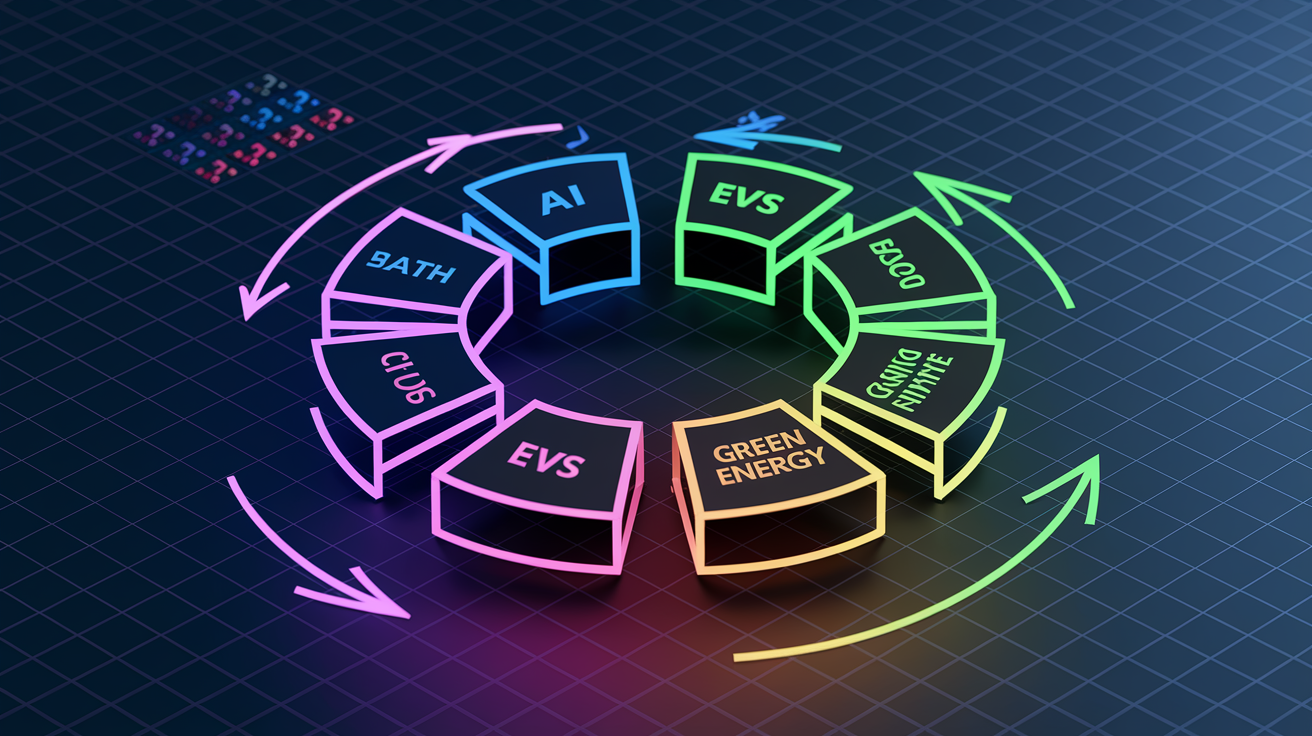
Sector catalysts operate at the industry level, moving groups of related stocks in tandem even when individual company fundamentals differ. Sector rotation driven by interest-rate cycles is a recurring catalyst. When rates fall, investors rotate into growth sectors such as technology and consumer discretionary. When rates rise, flows shift toward financials, energy, and value-oriented names that benefit from higher yields or commodity strength. Inflation trends also drive rotation. Rising inflation favors energy, materials, and real assets, while disinflationary periods support long-duration growth and rate-sensitive utilities.
Emerging industry trends create multi-year secular catalysts. Artificial intelligence, electric vehicles, semiconductors, and green energy have each generated multi-billion-dollar market-cap expansions for early leaders. Stocks that establish product-market fit and solid fundamentals during the early stages of a trend can become multi-baggers, but many hyped names fail when the trend matures or when competition compresses margins. Competitive wins and losses within a sector also act as relative catalysts. One company’s major contract award or product recall can lift competitors or depress peers, redistributing market share and investor attention across the group.
Interest-rate cycle rotations shift billions of dollars between growth (tech, discretionary) and value (financials, energy) depending on whether rates are rising or falling. Secular technology trends such as AI or EVs create long-duration catalysts that can lift sector leaders 100 to 500 percent over multiple years, though speculative names often collapse when hype fades. Margin pressure or cost inflation across an industry (rising labor costs, input-price spikes) can compress valuations and trigger 10 to 20 percent sector-wide declines until companies demonstrate pricing power or cost control.
Trading Strategies Built Around Stock Market Catalyst Types

Catalyst-driven trading strategies combine event identification with technical confirmation to improve win rates and manage risk. The first rule is to avoid trading percentage gainers that lack a clear catalyst. Stocks that spike on no news often fade the next session, erasing early gains and trapping late buyers. Instead, build watchlists around scheduled catalysts such as earnings calendars, central bank meetings, and FDA decision dates, then map those events to sectors and individual names. A weekly catalyst calendar helps prioritize which events are likely to generate the largest moves and which sectors will see the most flow.
Pre-move detection using volume and On-Balance Volume allows you to spot institutional accumulation before the headline catalyst becomes public. Rising OBV combined with steady or slightly higher prices suggests smart money is positioning ahead of an announcement. Once the catalyst hits, wait for volume confirmation rather than chasing the initial spike. Many catalysts produce a day-one pop followed by a pullback, and the sustainable leg often begins on day two or three when conviction buyers step in. Position sizing should reflect the binary nature of certain catalysts. FDA decisions, earnings, and M&A rumors carry high risk, so limit exposure to levels you can afford to lose if the event disappoints.
Exit planning is critical because sharp catalyst-driven spikes frequently retrace once the news is fully priced. A stock up 50 percent on an FDA approval may drop 20 percent the following week if no follow-on newsflow supports the move. Taking partial profits into strength and trailing stops as momentum slows protects gains and reduces the risk of round-tripping a winning trade. Combining catalysts with technical indicators (support and resistance levels, moving averages, relative strength) helps you distinguish between momentum that has follow-through and momentum that is exhausting. Historical studies of day traders show that approximately 97 percent of active traders lose money over time, underscoring the importance of disciplined entries, defined risk, and realistic profit targets when trading around catalysts.
| Catalyst Strategy | Execution Rule |
|---|---|
| Weekly catalyst calendar | List all scheduled earnings, central bank meetings, FDA dates, and commodity reports; map each to relevant sectors and tickers |
| Pre-move detection with OBV | Watch for rising volume and OBV divergence 1 to 3 days before the catalyst; accumulation often precedes the headline |
| Wait for volume confirmation | Avoid chasing day-one spikes; enter on day two or three when volume confirms follow-through and late sellers are flushed |
| Plan exits before entry | Set profit targets and trailing stops; catalyst-driven moves often retrace 30 to 50% once the initial news is fully priced |
Final Words
We mapped the main types of stock market catalysts and how they push prices — from company news and regulatory rulings to macro data, market flows, shocks, and sector trends.
That framework shows why catalysts often produce volume spikes, quick breakouts, and rule-driven reactions that matter for positioning and risk.
Watch earnings calendars, Fed moves, index rebalances, and shifts in short interest.
Use the types of stock market catalysts as a practical checklist for sizing, timing, and exits — keep your plan, and you’ll be better positioned for the next move.
FAQ
Q: What are catalysts in stocks?
A: Catalysts in stocks are events that trigger price movement—company-specific actions or macro forces. They change investor expectations and often cause volume spikes, breakouts, or short-term re‑pricing that affect portfolio positioning.
Q: What are the 7 sectors of the stock market?
A: The seven sectors of the stock market are energy, materials, industrials, consumer discretionary, consumer staples, healthcare, and financials. Different classification systems may split or add sectors like technology and utilities.
Q: What are the 7 main investment types?
A: The seven main investment types are stocks, bonds, cash equivalents, real estate, commodities, mutual funds/ETFs, and alternative investments (private equity, hedge funds). They differ in risk, return, and liquidity roles in a portfolio.
Q: What are the 4 types of stocks?
A: The four types of stocks are common, preferred, growth, and value. Common shares have voting rights; preferred get dividend priority; growth focuses on reinvestment; value trades below perceived fundamentals.